From FRP, Plaster and Hand Modeling to 3D Sculpture — Why the Studio Changes: A 3D Sculpture Guide Starting with A Studio Free of Dust and Fumes — Advantages over FRP, Editions, Finishing and Installation
A studio free of dust and fumes made with 3D sculpture: advantages over frp and hand sculpting. Form-making happens at the factory while the artist receives a clean piece and concentrates on finishing and direction, so the studio becomes a place for thinking and drawing again. Easy guidance for sculptors, fabrication workshop owners and exhibition planners from GLUCK and Sculpia.
Series Guide: From FRP, Plaster and Hand Modeling to 3D Sculpture — Why the Studio Changes
The more handwork a piece demands, like small pieces from a studio attached to a home, the more a digital master helps. If you are planning a studio free of dust and fumes, start by seeing what gets easier and what to prepare from the angle of advantages over frp and hand sculpting.
How 3D sculpture eases the hardships of traditional methods: dust and fumes, mold limits, the burden of remaking, and weight in transport
Is there a way to make large sculpture without fiberglass dust and fumes?
How This Four-Genre Series Fits Together
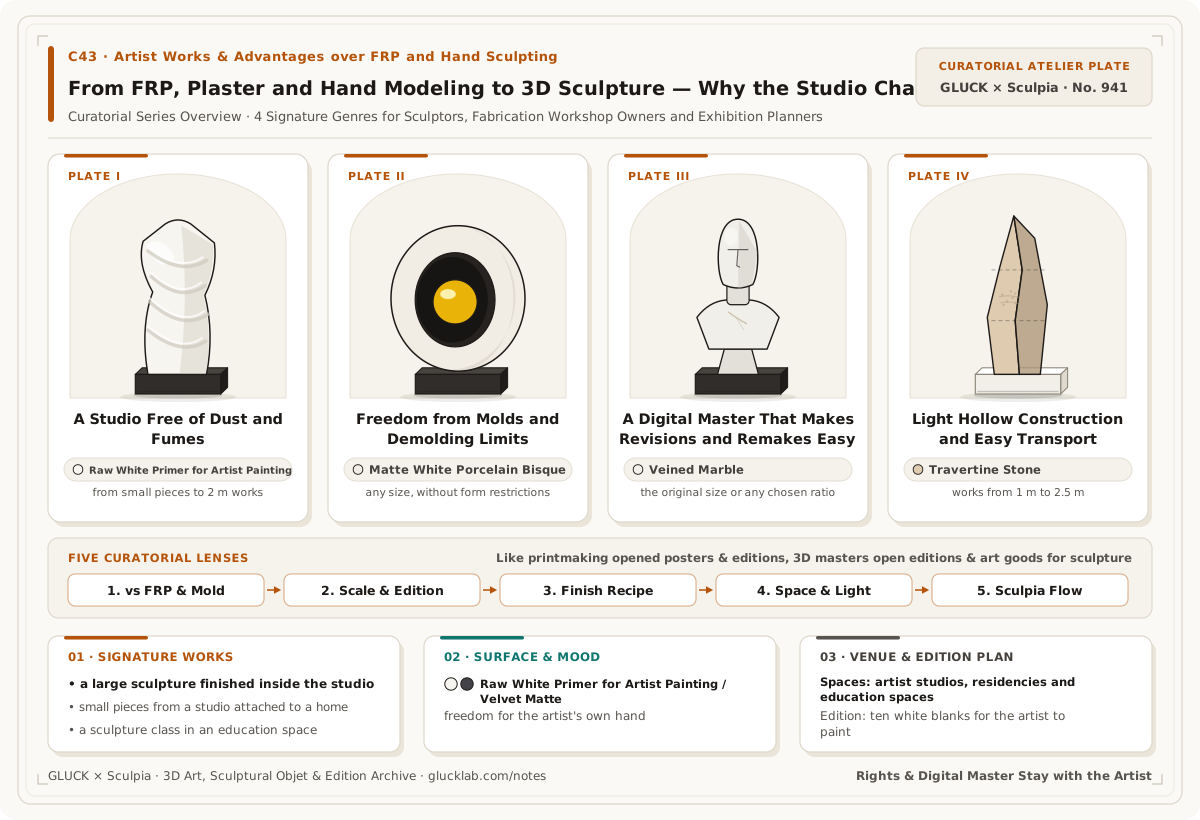
How 3D sculpture eases the hardships of traditional methods: dust and fumes, mold limits, the burden of remaking, and weight in transport. Anchored in our Artist Works & Advantages over FRP and Hand Sculpting pillar for sculptors, fabrication workshop owners and exhibition planners, this flagship guide connects all four sculptural genres in the From FRP, Plaster and Hand Modeling to 3D Sculpture — Why the Studio Changes series so you can compare form, scale, surface and edition strategy in one place.
| Genre in Series | Signature Work | Recommended Finishes | Scale & Venue |
|---|---|---|---|
| A Studio Free of Dust and Fumes | A large sculpture finished inside the studio | Raw white primer for artist painting / Velvet matte | from small pieces to 2 m works · artist studios |
| Freedom from Molds and Demolding Limits | Petals curling inward | Matte white porcelain bisque / Bronze verdigris patina | any size, without form restrictions · solo shows |
| A Digital Master That Makes Revisions and Remakes Easy | An identical remake of a work damaged after an exhibition | Veined marble / Airbrushed gradient | the original size or any chosen ratio · touring shows |
| Light Hollow Construction and Easy Transport | A 2 m sculpture two people can lift | Travertine stone / Weathered Corten rust | works from 1 m to 2.5 m · overseas exhibitions |
Scale, Surface and Edition Synthesis Across This Series
Across a studio free of dust and fumes (from small pieces to 2 m works) and freedom from molds and demolding limits (any size, without form restrictions), a single verified digital master lets artists bridge intimate maquettes and architectural centerpieces without mold seams or fiberglass dust. Meanwhile, a digital master that makes revisions and remakes easy and light hollow construction and easy transport show how pairing veined marble or travertine stone turns one sculptural language into collector editions such as "one experimental work and five reduced study models" and "one large piece designed to separate for shipping" through GLUCK and Sculpia.
FRP and Plaster Hand Work vs 3D Sculpture: What Differs — A Studio Free of Dust and Fumes
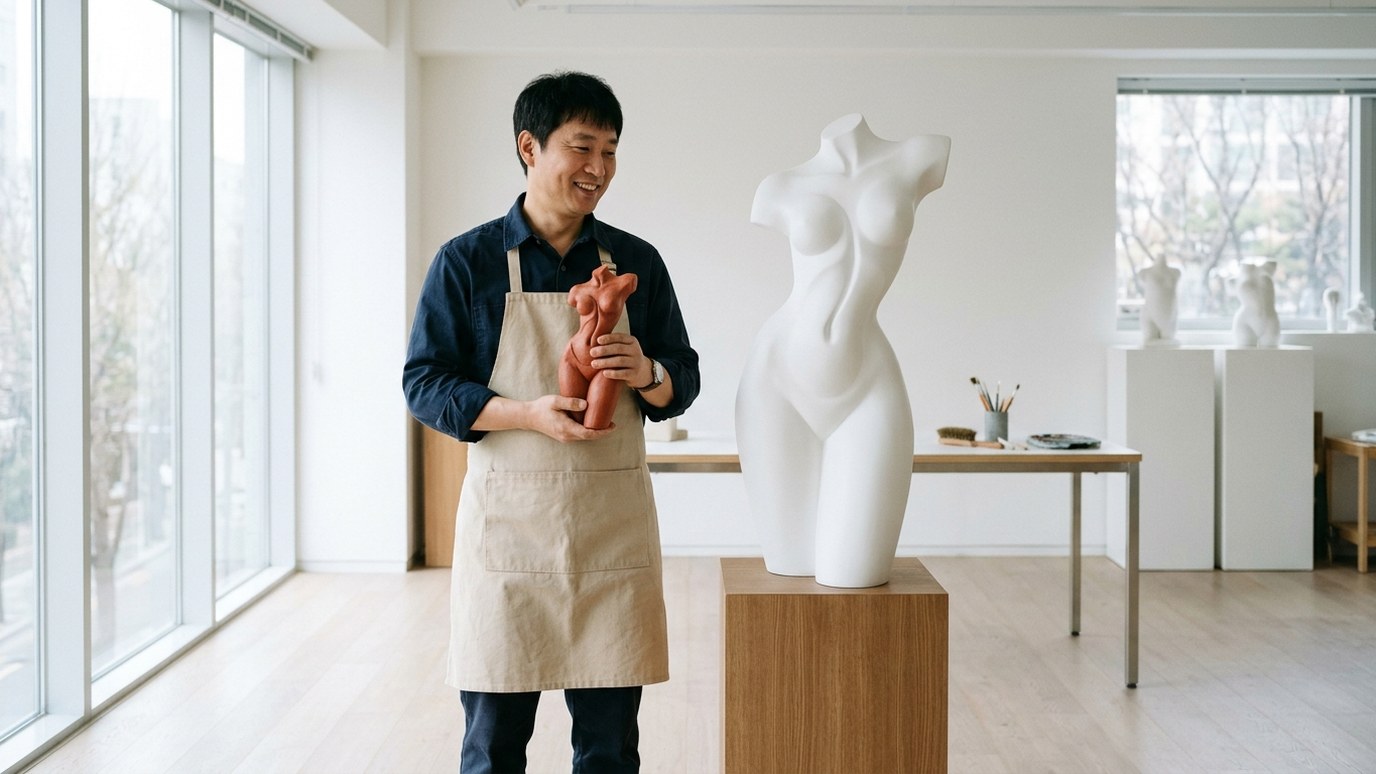
The biggest hidden cost of hand modeling and FRP is time: original, mold, laminating, demolding and cleanup each demand hands and waiting. With a studio free of dust and fumes in particular, cutting, laying and grinding fiberglass drives fine fibers into skin and clothes, and the smell lingers in the studio and neighboring spaces for days.
Making the form straight from a digital master removes the molding and demolding steps. Form-making happens at the factory while the artist receives a clean piece and concentrates on finishing and direction, so the studio becomes a place for thinking and drawing again. The artist can spend the saved time on surface feel and finish choices.
In short, 3D sculpture brings four changes to a studio free of dust and fumes. You no longer have to simplify the form. Proportions stay true when the size changes. Remaking the same work becomes easy. And hollow construction keeps it light. In places like artist studios, residencies and education spaces, those four translate directly into breathing room for schedules and installation.
On-Demand Publishing Without Warehouse Risk
Independent book publishers now print copies as readers order rather than stacking unsold boxes in storage. Connected with Sculpia, a studio free of dust and fumes follows the same calm rhythm: editions of small pieces from a studio attached to a home are crafted, finished in raw white primer for artist painting and shipped as collectors reserve them.
Atelier Checklist: Practical Boundaries to Know
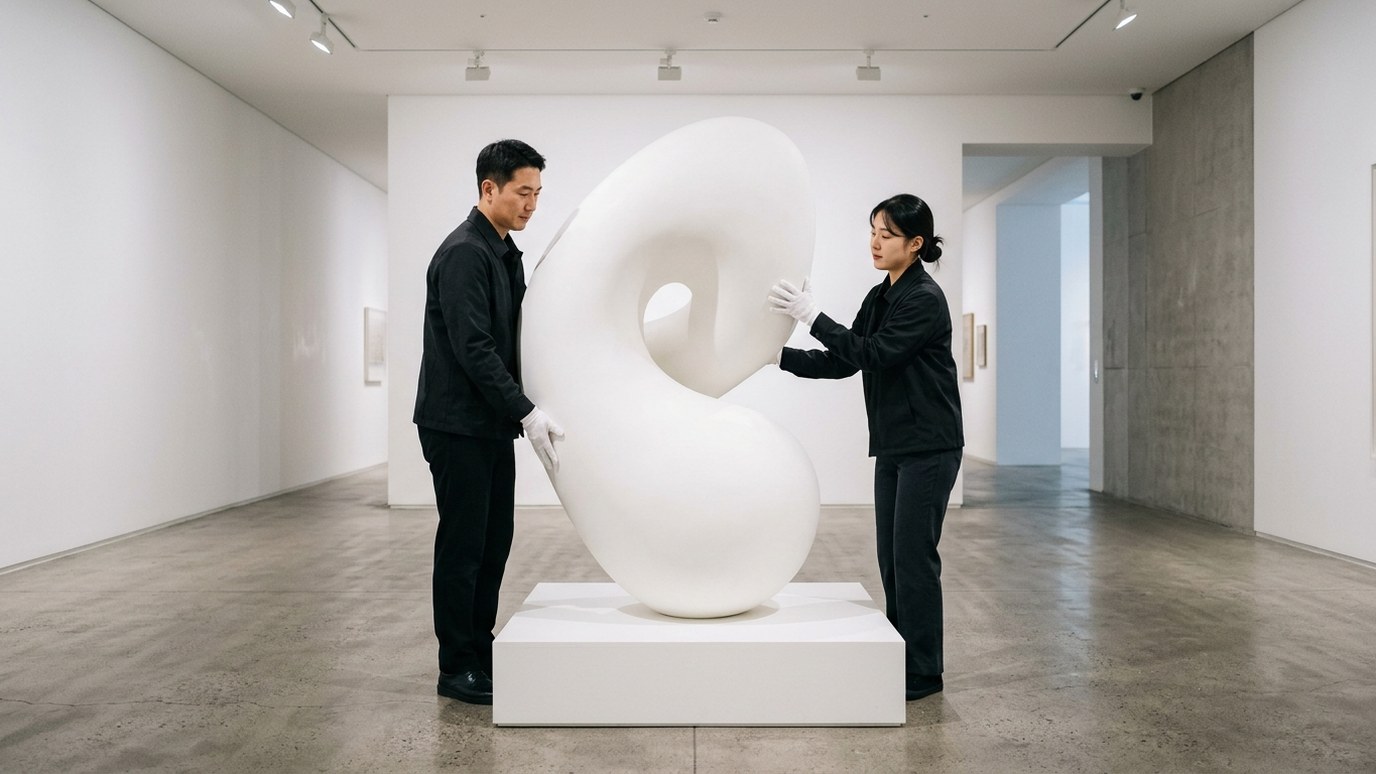
- Slender tips on forms like small pieces from a studio attached to a home can suffer knocks during shipping, so we either thicken fragile edges imperceptibly at 15 cm or engineer hidden plug-in joints.
- Screen previews never match gallery spotlights 1:1—before finishing a studio free of dust and fumes, we always review palm-sized swatches of raw white primer for artist painting and velvet matte under real light with the artist.
Ready to Shape a studio free of dust and fumes With Us?
Thinking through raw white primer for artist painting swatches or a 15 cm–1.5 m scale ladder for a studio free of dust and fumes? Send a rough drawing or clay reference and our atelier team will map the steps.
Global Art Fair & Biennale Air-Freight (ATA Carnet) Customs & 30-Minute Tool-Free Modular Assembly Matrix
When shipping monumental sculptures and exhibition centerpieces overseas to Art Basel, Frieze, the Venice Biennale, or global pop-up tours, sculptures must be engineered around air-cargo door clearances, ATA Carnet temporary import/export customs inspections, and 30-minute tool-free on-site assembly.
| Global Exhibition Logistics Criterion | International Air Cargo & Customs Standard | Conventional Monolithic Wooden Crate | Sculpia & GLUCK Modular Flight-Case Solution |
|---|---|---|---|
| Air-Freight Module Sizing & Shock Damping | Cargo height under 1,500mm with multi-axis transit vibration isolation | Oversized monolithic crates rejected by passenger/cargo bellies or damaged during handling | 700–1,100mm modular blocks (15–28kg per module) housed in 3D contour-cut EVA foam flight cases |
| ATA Carnet Customs Documentation | Engraved part IDs matching exact net weight, dimensions, and exploded photo manifests | Unlabeled parts and weight discrepancies trigger customs holds and manual uncrating | Engraved module IDs paired with certified packing lists showing exact weights, dimensions, and photos |
| Hidden Alignment Pin & On-Site Assembly | Two handlers must complete assembly within 30 minutes without adhesives or repainting | Requires on-site gluing, puttying, and touch-up painting that delay opening reception | 0.05–0.1mm slip-fit stainless alignment pins, neodymium magnets, and quick-lock bolts for 30-minute assembly |
- ATA Carnet Temporary Customs Passport Readiness: Every detachable module features a permanent serial mark matched to an illustrated customs manifest for seamless round-trip clearance.
- Multi-City Tour Reusability: Embedded metal bushings and tapered locator pins allow repeated assembly and disassembly across international tour stops without joint wear.
Studio & Exhibition Q&A on A Studio Free of Dust and Fumes
Is there a way to make large sculpture without fiberglass dust and fumes?
Yes. Form-making happens at the factory while the artist receives a clean piece and concentrates on finishing and direction, so the studio becomes a place for thinking and drawing again. A small test print confirms proportion and a palm-sized sample confirms the finish before production.
How does 3D fabrication compare with plaster or FRP molds for a studio free of dust and fumes?
Traditional work faces cutting, laying and grinding fiberglass drives fine fibers into skin and clothes, and the smell lingers in the studio and neighboring spaces for days. Mold-free 3D building keeps your studio free of fiberglass dust and preserves inward folds on pieces like a large sculpture finished inside the studio.
Which finish suits a studio free of dust and fumes best?
Pairing raw white primer for artist painting (freedom for the artist's own hand) with velvet matte (quiet, design-led sophistication) covers two distinct moods; velvet matte shines especially on design objects, product risers and stage props.
Can a studio free of dust and fumes become an edition or goods?
Yes. From one digital master you could plan a numbered 20 at 45 cm and an open edition of about 300 at 15 cm, starting from "ten white blanks for the artist to paint". All rights stay with the artist.
What lighting and anchoring work best when installing a studio free of dust and fumes?
Aim low-heat LEDs from a 30 to 45 degree side angle to sculpt shadows across a sculpture class in an education space, keep a weighted plinth with concealed base pins, and follow simple care: Keep it wrapped against dust until it is painted.
How are edition numbers and artist rights managed on a studio free of dust and fumes?
Every digital file and copyright stays 100% with the artist. Whether you cap a signed run at 20 pieces (45 cm) or connect online sales via Sculpia, production only happens with artist sign-off.
How do you support ATA Carnet customs clearance and 30-minute on-site modular assembly for international exhibitions?
We divide large works into 15–28kg air-cargo modules inside contour-milled EVA foam flight cases, engrave serial IDs matched to an illustrated ATA Carnet packing manifest, and integrate 0.05–0.1mm tapered alignment pins with quick-lock fasteners so two handlers can assemble the piece in 30 minutes without tools.