Contemporary Sculptors' Works — From Clay Maquette to Large-Scale Piece: A 3D Sculpture Guide Starting with Figurative Human Sculpture with Drapery — Advantages over FRP, Editions, Finishing and Installation
Figurative human sculpture with drapery made with 3D sculpture: advantages over frp and hand sculpting. Fold depth from the scanned original stays true at any size, and because no mold is needed, folds that curl inward survive exactly as sculpted. Easy guidance for sculptors and installation artists from GLUCK and Sculpia.
Series Guide: Contemporary Sculptors' Works — From Clay Maquette to Large-Scale Piece
Behind every figurative human sculpture with drapery you meet in museum exhibitions, there is an artist's original and a fabrication team's hands. This note gathers practical sense on advantages over frp and hand sculpting that sculptors and installation artists can use right away.
Scanning the small original an artist shaped by hand, enlarging it with true proportions, and finishing it as a work that keeps the sculptor's touch
Can the fold depth of my hand-sculpted figure survive enlargement to 2 m?

How This Four-Genre Series Fits Together
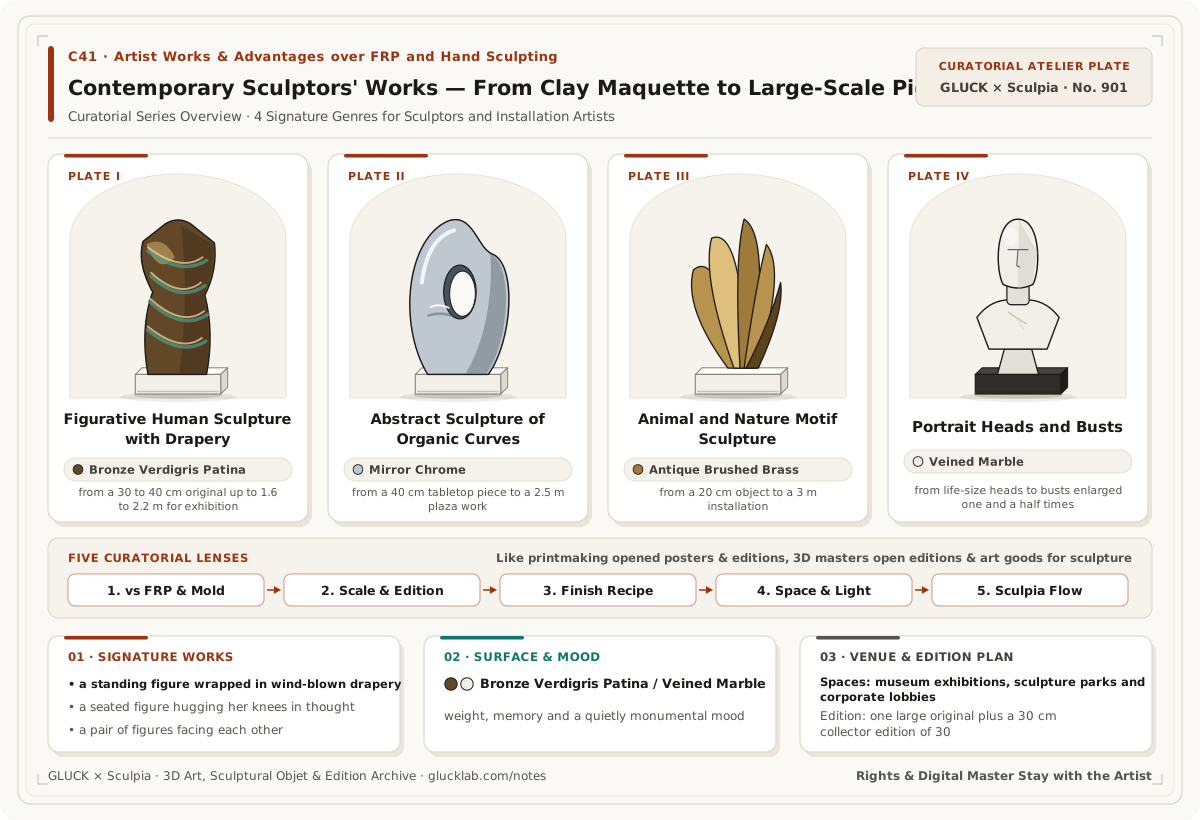
Scanning the small original an artist shaped by hand, enlarging it with true proportions, and finishing it as a work that keeps the sculptor's touch. Anchored in our Artist Works & Advantages over FRP and Hand Sculpting pillar for sculptors and installation artists, this flagship guide connects all four sculptural genres in the Contemporary Sculptors' Works — From Clay Maquette to Large-Scale Piece series so you can compare form, scale, surface and edition strategy in one place.
| Genre in Series | Signature Work | Recommended Finishes | Scale & Venue |
|---|---|---|---|
| Figurative Human Sculpture with Drapery | A standing figure wrapped in wind-blown drapery | Bronze verdigris patina / Veined marble | from a 30 to 40 cm original up to 1.6 to 2.2 m for exhibition · museum exhibitions |
| Abstract Sculpture of Organic Curves | A curved form like a drop frozen mid-fall | Mirror chrome / Velvet matte | from a 40 cm tabletop piece to a 2.5 m plaza work · solo gallery shows |
| Animal and Nature Motif Sculpture | A crane at the instant it opens its wings | Antique brushed brass / Volcanic basalt | from a 20 cm object to a 3 m installation · gardens |
| Portrait Heads and Busts | A founder's commemorative bust | Veined marble / Gold-leaf gilding | from life-size heads to busts enlarged one and a half times · memorial halls |
Scale, Surface and Edition Synthesis Across This Series
Across figurative human sculpture with drapery (from a 30 to 40 cm original up to 1.6 to 2.2 m for exhibition) and abstract sculpture of organic curves (from a 40 cm tabletop piece to a 2.5 m plaza work), a single verified digital master lets artists bridge intimate maquettes and architectural centerpieces without mold seams or fiberglass dust. Meanwhile, animal and nature motif sculpture and portrait heads and busts show how pairing antique brushed brass or veined marble turns one sculptural language into collector editions such as "a three-piece series of one form in three finishes" and "three commemorative busts plus reduced heads for gifts of thanks" through GLUCK and Sculpia.
FRP and Plaster Hand Work vs 3D Sculpture: What Differs — Figurative Human Sculpture with Drapery
The biggest hidden cost of hand modeling and FRP is time: original, mold, laminating, demolding and cleanup each demand hands and waiting. With figurative human sculpture with drapery in particular, taking a plaster mold means deep folds lock into the mold, forcing it into many pieces, and the dust and fumes of laying fiberglass linger in the studio for days.
3D sculpture, by contrast, turns the artist's original into data and builds the form layer by layer. Fold depth from the scanned original stays true at any size, and because no mold is needed, folds that curl inward survive exactly as sculpted. The dusty, smelly stages stay inside the factory, so the studio stays clean.
Take a standing figure wrapped in wind-blown drapery, a seated figure hugging her knees in thought and a pair of figures facing each other as examples and the difference sharpens. By hand, each would repeat molding and laminating; in 3D sculpture the time goes into refining the digital master, and everything after follows at the same quality.
Print-Edition Numbering Applied to Figurative Human Sculpture with Drapery
Master printmakers pull a fixed run—say 30 signed impressions—so collectors trust rarity while more people live with the artist's language. With figurative human sculpture with drapery, one verified digital file lets an artist release "one large original plus a 30 cm collector edition of 30" where piece 1 and piece 30 share identical geometry and hand-finished character.
Atelier Checklist: Practical Boundaries to Know
- Finishes like bronze verdigris patina and veined marble are artisan surface coats rather than solid cast metal or quarried stone; if a standing figure wrapped in wind-blown drapery requires true foundry bronze, the 3D print can instead serve as the casting master.
- If figurative human sculpture with drapery is headed outdoors or into sunlit atriums in museum exhibitions, internal framing, water drainage and UV-protective clear coats must be planned from the start.
Ready to Shape figurative human sculpture with drapery With Us?
Thinking through bronze verdigris patina swatches or a 15 cm–1.7 m scale ladder for figurative human sculpture with drapery? Send a rough drawing or clay reference and our atelier team will map the steps.
Practical FAQ: Figurative Human Sculpture with Drapery
Can the fold depth of my hand-sculpted figure survive enlargement to 2 m?
Yes. Fold depth from the scanned original stays true at any size, and because no mold is needed, folds that curl inward survive exactly as sculpted. A small test print confirms proportion and a palm-sized sample confirms the finish before production.
How does 3D fabrication compare with plaster or FRP molds for figurative human sculpture with drapery?
Traditional work faces taking a plaster mold means deep folds lock into the mold, forcing it into many pieces, and the dust and fumes of laying fiberglass linger in the studio for days. Mold-free 3D building keeps your studio free of fiberglass dust and preserves inward folds on pieces like a standing figure wrapped in wind-blown drapery.
Which finish suits figurative human sculpture with drapery best?
Pairing bronze verdigris patina (weight, memory and a quietly monumental mood) with veined marble (classical, dignified mood) covers two distinct moods; veined marble shines especially on busts, classical homages and suite objects.
Can figurative human sculpture with drapery become an edition or goods?
Yes. From one digital master you could plan a numbered 30 at 50 cm and an open edition of about 99 at 15 cm, starting from "one large original plus a 30 cm collector edition of 30". All rights stay with the artist.
What lighting and anchoring work best when installing figurative human sculpture with drapery?
Aim low-heat LEDs from a 30 to 45 degree side angle to sculpt shadows across a pair of figures facing each other, keep a weighted plinth with concealed base pins, and follow simple care: Dust with a dry microfiber cloth; avoid wet wiping and detergents.
How are edition numbers and artist rights managed on figurative human sculpture with drapery?
Every digital file and copyright stays 100% with the artist. Whether you cap a signed run at 30 pieces (50 cm) or connect online sales via Sculpia, production only happens with artist sign-off.