Sculpia and the Artist Collaboration Ecosystem: A 3D Sculpture Guide Starting with Digitizing and Archiving Artist Originals — Advantages over FRP, Editions, Finishing and Installation
Digitizing and archiving artist originals made with 3D sculpture: advantages over frp and hand sculpting. Digital masters from scanning and modeling store without deformation and are used for editions and goods only within the artist's permission. Easy guidance for artists, artist managers and art-commerce planners from GLUCK and Sculpia.
Series Guide: Sculpia and the Artist Collaboration Ecosystem
For artists, artist managers and art-commerce planners, digitizing and archiving artist originals has always been a battle of time and hands. Digital masters from scanning and modeling store without deformation and are used for editions and goods only within the artist's permission. This note looks at digitizing and archiving artist originals through the lens of advantages over frp and hand sculpting and explains what to know, in plain words.
The flow from making to selling: digitizing and storing originals, planning small editions, building pop-up and fair goods, and running an artist brand shop
Can my clay original be stored digitally and reused when needed?
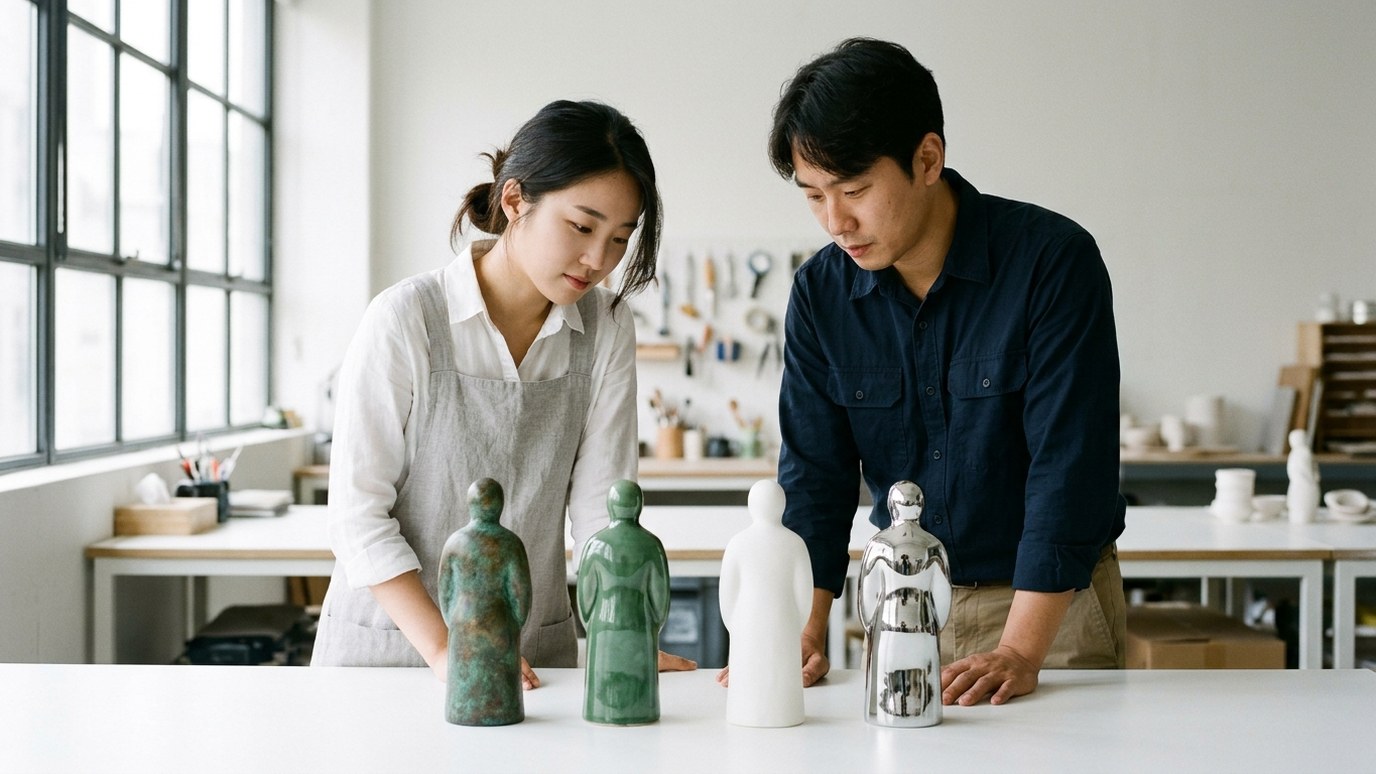
How This Four-Genre Series Fits Together
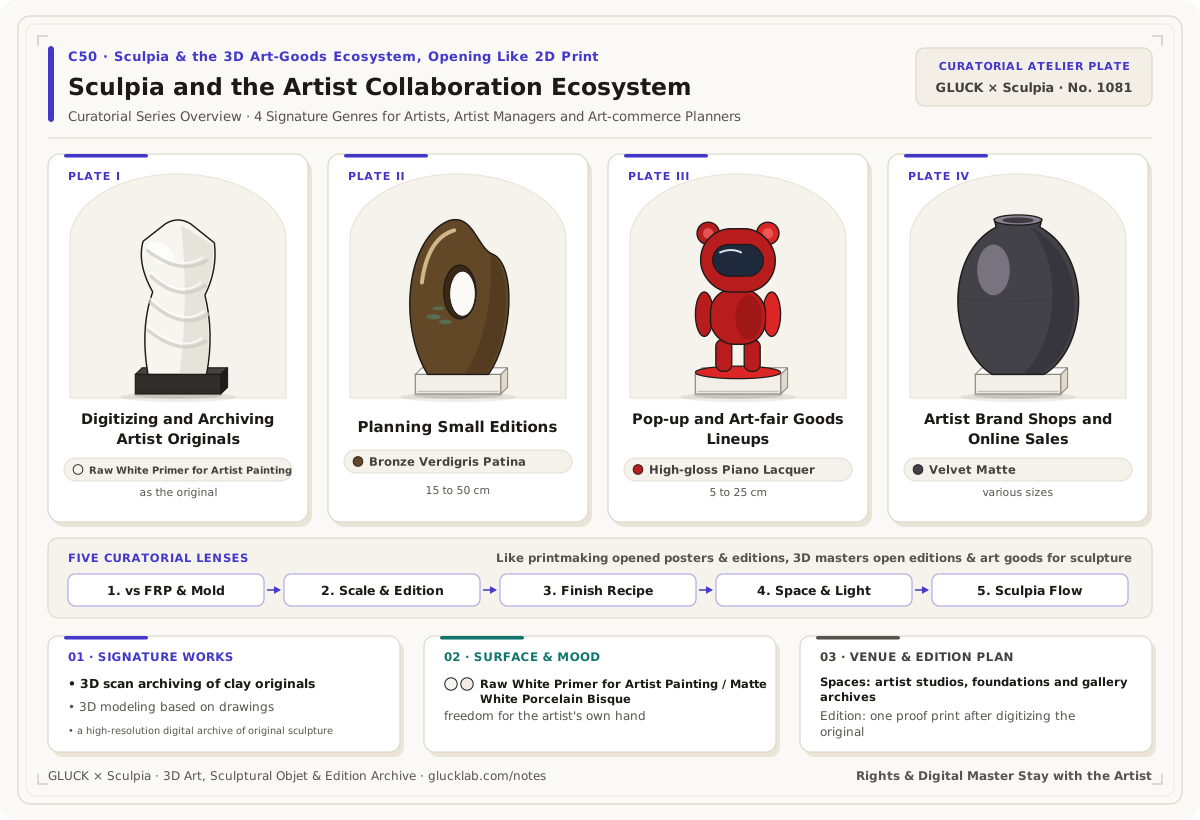
The flow from making to selling: digitizing and storing originals, planning small editions, building pop-up and fair goods, and running an artist brand shop. Anchored in our Sculpia & the 3D Art-Goods Ecosystem, Opening Like 2D Print pillar for artists, artist managers and art-commerce planners, this flagship guide connects all four sculptural genres in the Sculpia and the Artist Collaboration Ecosystem series so you can compare form, scale, surface and edition strategy in one place.
| Genre in Series | Signature Work | Recommended Finishes | Scale & Venue |
|---|---|---|---|
| Digitizing and Archiving Artist Originals | 3D scan archiving of clay originals | Raw white primer for artist painting / Matte white porcelain bisque | as the original · artist studios |
| Planning Small Editions | A first edition limited to 30 | Bronze verdigris patina / Champagne titanium | 15 to 50 cm · galleries |
| Pop-up and Art-fair Goods Lineups | Key-work miniatures with postcard sets | High-gloss piano lacquer / Iridescent aurora pearl | 5 to 25 cm · art fairs |
| Artist Brand Shops and Online Sales | An object brand in the artist's name | Velvet matte / Gold-leaf gilding | various sizes · online shops |
Scale, Surface and Edition Synthesis Across This Series
Across digitizing and archiving artist originals (as the original) and planning small editions (15 to 50 cm), a single verified digital master lets artists bridge intimate maquettes and architectural centerpieces without mold seams or fiberglass dust. Meanwhile, pop-up and art-fair goods lineups and artist brand shops and online sales show how pairing high-gloss piano lacquer or velvet matte turns one sculptural language into collector editions such as "30 pieces at 30 cm and 99 at 15 cm" and "open editions alongside seasonal limited runs" through GLUCK and Sculpia.
FRP and Plaster Hand Work vs 3D Sculpture: What Differs — Digitizing and Archiving Artist Originals
FRP has long been the standard for sculpture because it is light and tough, but with delicate work such as digitizing and archiving artist originals its limits are clear. Plaster and silicone molds harden and deform over time, making long-term storage difficult.
3D sculpture, by contrast, turns the artist's original into data and builds the form layer by layer. Digital masters from scanning and modeling store without deformation and are used for editions and goods only within the artist's permission. The dusty, smelly stages stay inside the factory, so the studio stays clean.
In short, 3D sculpture brings four changes to digitizing and archiving artist originals. You no longer have to simplify the form. Proportions stay true when the size changes. Remaking the same work becomes easy. And hollow construction keeps it light. In places like artist studios, foundations and gallery archives, those four translate directly into breathing room for schedules and installation.
From Printing Press to 3D Editions of Digitizing and Archiving Artist Originals
Before printmaking, an image lived on a single wall; once plates and presses arrived, posters, art books and numbered prints entered everyday rooms without diminishing the original canvas. 3D sculpture brings that exact shift to digitizing and archiving artist originals: once 3D scan archiving of clay originals is preserved as a digital master, a 1.5 m gallery piece can coexist with 15 cm collector goods.
Atelier Checklist: Practical Boundaries to Know
- When digitizing and archiving artist originals scales up toward 1.5 m (beyond roughly 1 m in a single piece), we print clean sections over an internal stainless or steel frame and blend every seam under putty, sanding and raw white primer for artist painting.
- Finishes like raw white primer for artist painting and matte white porcelain bisque are artisan surface coats rather than solid cast metal or quarried stone; if 3D scan archiving of clay originals requires true foundry bronze, the 3D print can instead serve as the casting master.
From Maquette to digitizing and archiving artist originals Edition
From a single exhibition piece around 1.5 m to "one proof print after digitizing the original", GLUCK and Sculpia help artists, artist managers and art-commerce planners move smoothly from test print to installation.
Practical FAQ: Digitizing and Archiving Artist Originals
Can my clay original be stored digitally and reused when needed?
Yes. Digital masters from scanning and modeling store without deformation and are used for editions and goods only within the artist's permission. A small test print confirms proportion and a palm-sized sample confirms the finish before production.
How does 3D fabrication compare with plaster or FRP molds for digitizing and archiving artist originals?
Traditional work faces plaster and silicone molds harden and deform over time, making long-term storage difficult. Mold-free 3D building keeps your studio free of fiberglass dust and preserves inward folds on pieces like 3D scan archiving of clay originals.
Which finish suits digitizing and archiving artist originals best?
Pairing raw white primer for artist painting (freedom for the artist's own hand) with matte white porcelain bisque (Korean restraint, breathing space and calm) covers two distinct moods; matte white porcelain bisque shines especially on moon-jar homages, minimal sculpture and gallery objects.
Can digitizing and archiving artist originals become an edition or goods?
Yes. From one digital master you could plan a numbered 20 at 45 cm and an open edition of about 99 at 15 cm, starting from "one proof print after digitizing the original". All rights stay with the artist.
What lighting and anchoring work best when installing digitizing and archiving artist originals?
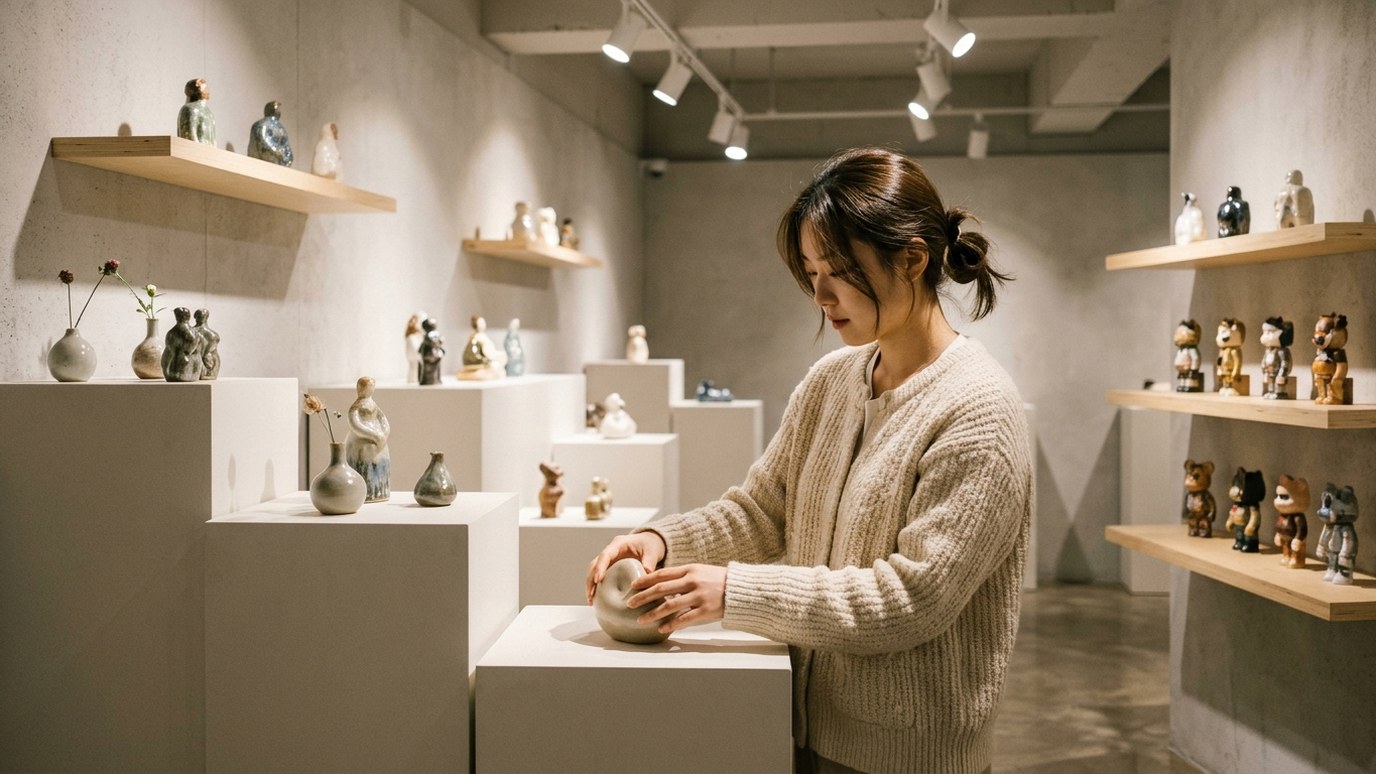
Aim low-heat LEDs from a 30 to 45 degree side angle to sculpt shadows across a high-resolution digital archive of original sculpture, keep a weighted plinth with concealed base pins, and follow simple care: Keep it wrapped against dust until it is painted.
How are edition numbers and artist rights managed on digitizing and archiving artist originals?
Every digital file and copyright stays 100% with the artist. Whether you cap a signed run at 20 pieces (45 cm) or connect online sales via Sculpia, production only happens with artist sign-off.