Art Toys, Designer Figures and Character Sculpture: A 3D Sculpture Guide Starting with Artist Art-toy Originals — Advantages over FRP, Editions, Finishing and Installation
Artist art-toy originals made with 3D sculpture: advantages over frp and hand sculpting. Poses and proportions can be changed and printed several times digitally, letting the artist hold each one and pick the best. Easy guidance for art-toy artists, character IP planners and illustrators from GLUCK and Sculpia.
Series Guide: Art Toys, Designer Figures and Character Sculpture
Hand-sculpted originals must be remade for every revision, and symmetry is hard to keep at small sizes. That is why many artists gave up on artist art-toy originals or simplified their forms. 3D sculpture offers a different answer to this old dilemma; here is how it looks from the angle of advantages over frp and hand sculpting.
Character sculpture at every scale: artists' art-toy originals, limited designer figures, giant character photo zones and blank toys for custom painting
Can I try several versions when turning my illustrated character into an art toy?
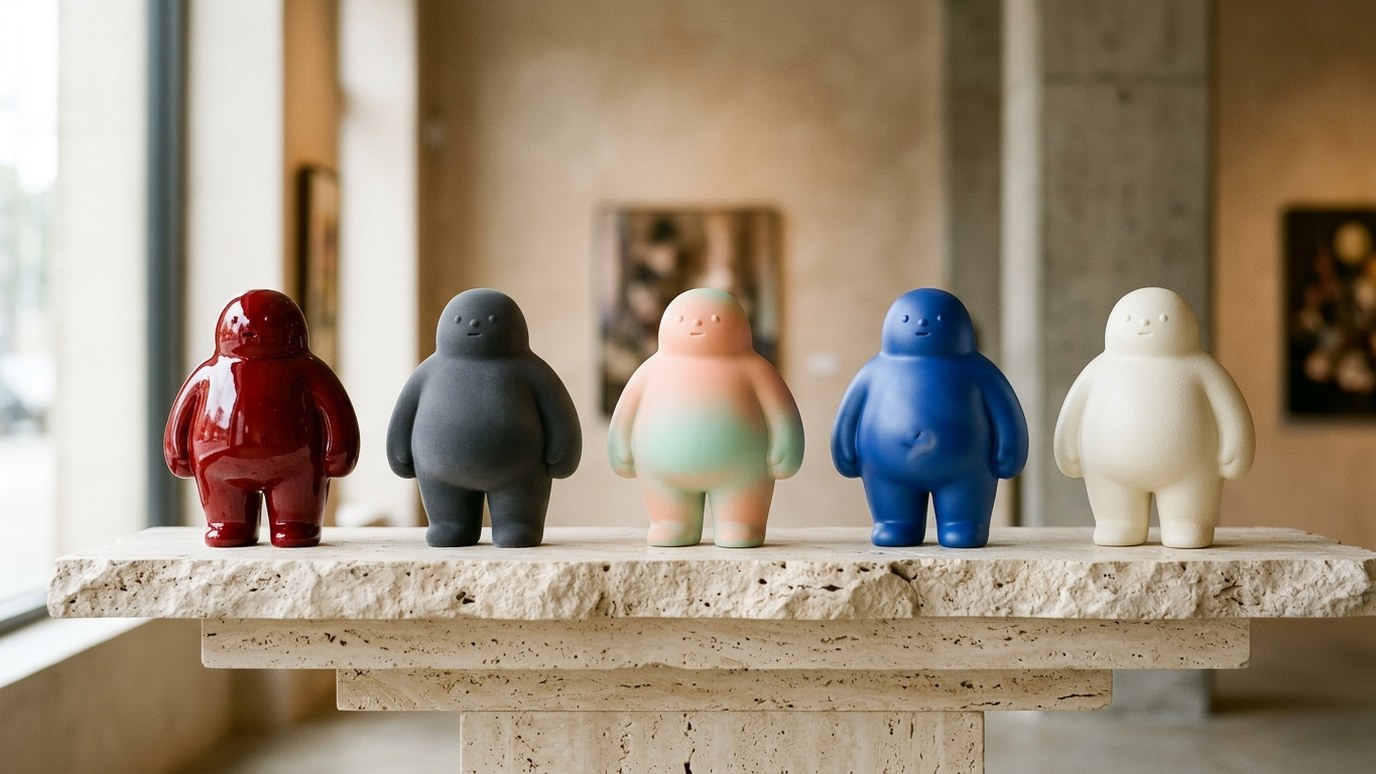
How This Four-Genre Series Fits Together
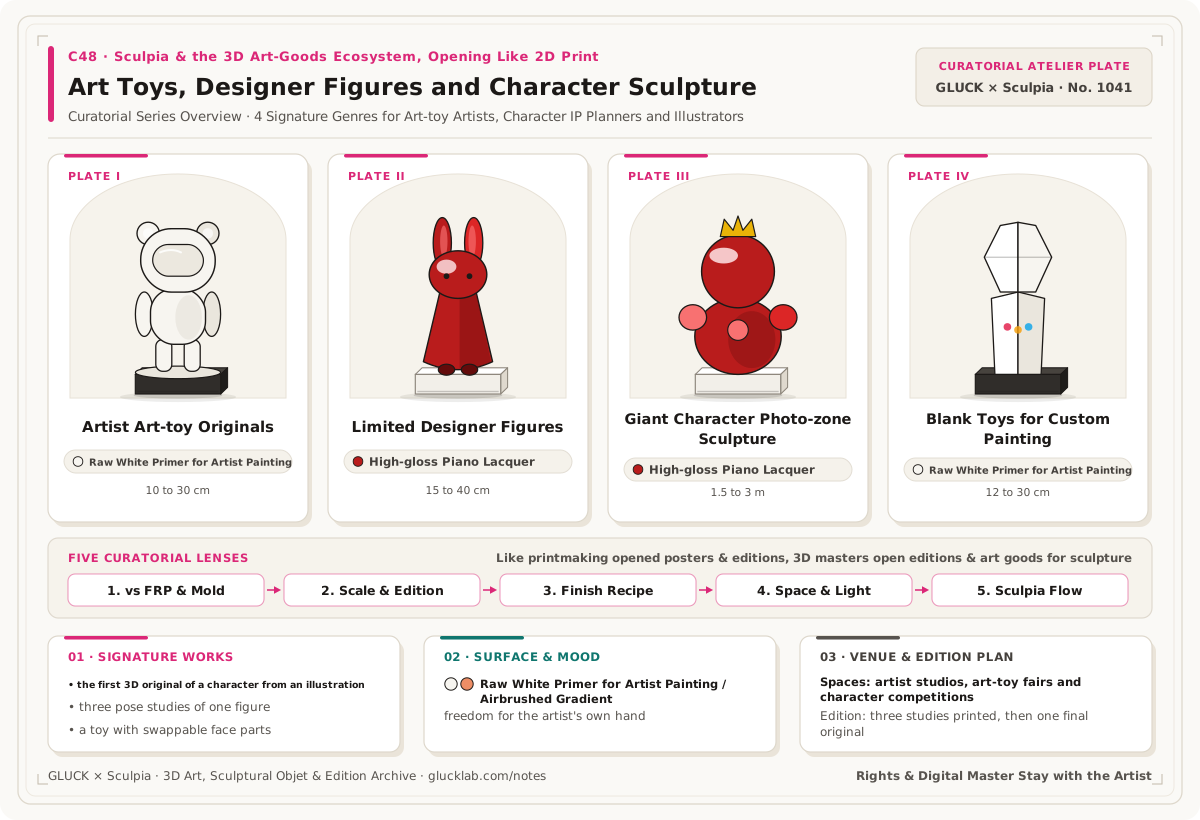
Character sculpture at every scale: artists' art-toy originals, limited designer figures, giant character photo zones and blank toys for custom painting. Anchored in our Sculpia & the 3D Art-Goods Ecosystem, Opening Like 2D Print pillar for art-toy artists, character IP planners and illustrators, this flagship guide connects all four sculptural genres in the Art Toys, Designer Figures and Character Sculpture series so you can compare form, scale, surface and edition strategy in one place.
| Genre in Series | Signature Work | Recommended Finishes | Scale & Venue |
|---|---|---|---|
| Artist Art-toy Originals | The first 3D original of a character from an illustration | Raw white primer for artist painting / Airbrushed gradient | 10 to 30 cm · artist studios |
| Limited Designer Figures | A figure limited to 100 signed pieces | High-gloss piano lacquer / Iridescent aurora pearl | 15 to 40 cm · figure fairs |
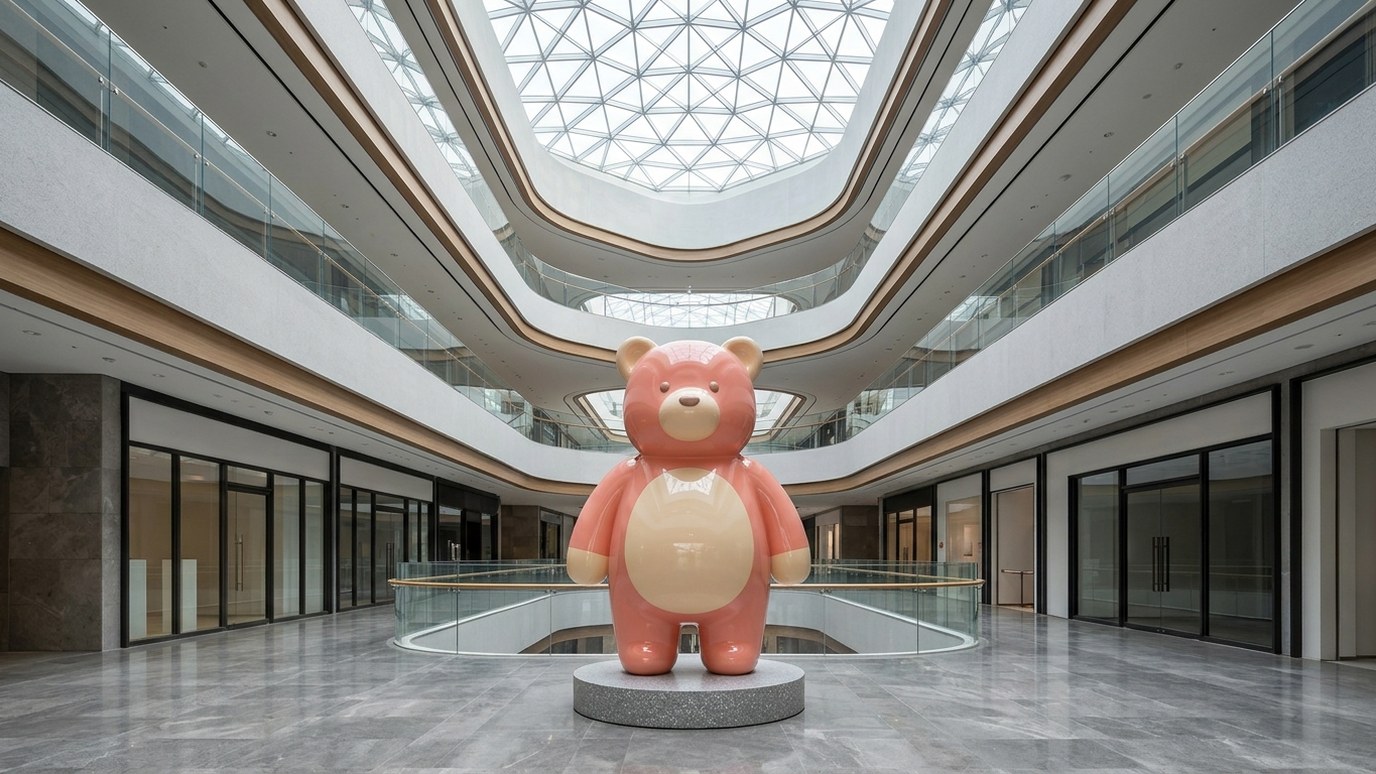
| Giant Character Photo-zone Sculpture | A 2.4 m character in a mall plaza | High-gloss piano lacquer / Velvet matte | 1.5 to 3 m · shopping malls |
| Blank Toys for Custom Painting | Blanks for a group show where each artist paints one | Raw white primer for artist painting / Velvet matte | 12 to 30 cm · group shows |
Scale, Surface and Edition Synthesis Across This Series
Across artist art-toy originals (10 to 30 cm) and limited designer figures (15 to 40 cm), a single verified digital master lets artists bridge intimate maquettes and architectural centerpieces without mold seams or fiberglass dust. Meanwhile, giant character photo-zone sculpture and blank toys for custom painting show how pairing high-gloss piano lacquer or raw white primer for artist painting turns one sculptural language into collector editions such as "three colorways of 50 each" and "60 blank toys" through GLUCK and Sculpia.
FRP and Plaster Hand Work vs 3D Sculpture: What Differs — Artist Art-toy Originals
Imagine making the first 3D original of a character from an illustration the old way. Hand-sculpted originals must be remade for every revision, and symmetry is hard to keep at small sizes. The artist had to simplify the form or wait on the workshop's schedule, and often both.
Making the form straight from a digital master removes the molding and demolding steps. Poses and proportions can be changed and printed several times digitally, letting the artist hold each one and pick the best. The artist can spend the saved time on surface feel and finish choices.
In short, 3D sculpture brings four changes to artist art-toy originals. You no longer have to simplify the form. Proportions stay true when the size changes. Remaking the same work becomes easy. And hollow construction keeps it light. In places like artist studios, art-toy fairs and character competitions, those four translate directly into breathing room for schedules and installation.
From Printing Press to 3D Editions of Artist Art-toy Originals
Before printmaking, an image lived on a single wall; once plates and presses arrived, posters, art books and numbered prints entered everyday rooms without diminishing the original canvas. 3D sculpture brings that exact shift to artist art-toy originals: once the first 3D original of a character from an illustration is preserved as a digital master, a 60 cm gallery piece can coexist with 15 cm collector goods.
Atelier Checklist: Practical Boundaries to Know
- Hollow construction keeps a 38 cm or 60 cm artist art-toy originals easy to handle, yet wall thickness and a weighted lower plinth are tuned carefully so it stands rock-steady.
- For touring shows of a toy with swappable face parts, deciding crate dimensions and concealed joint lines early lets artist art-toy originals assemble and pack down cleanly without repainting.
Discuss Your artist art-toy originals Project
Curious how the first 3D original of a character from an illustration would feel in raw white primer for artist painting? Share your venue timeline and approximate dimensions—we prepare proof-print and surface sample options first.
Questions Artists & Curators Ask About Artist Art-toy Originals
Can I try several versions when turning my illustrated character into an art toy?
Yes. Poses and proportions can be changed and printed several times digitally, letting the artist hold each one and pick the best. A small test print confirms proportion and a palm-sized sample confirms the finish before production.
How does 3D fabrication compare with plaster or FRP molds for artist art-toy originals?
Traditional work faces hand-sculpted originals must be remade for every revision, and symmetry is hard to keep at small sizes. Mold-free 3D building keeps your studio free of fiberglass dust and preserves inward folds on pieces like the first 3D original of a character from an illustration.
Which finish suits artist art-toy originals best?
Pairing raw white primer for artist painting (freedom for the artist's own hand) with airbrushed gradient (emotional, painterly mood) covers two distinct moods; airbrushed gradient shines especially on art toys, abstract objects and pop-up props.
Can artist art-toy originals become an edition or goods?
Yes. From one digital master you could plan a numbered 30 at 38 cm and an open edition of about 150 at 15 cm, starting from "three studies printed, then one final original". All rights stay with the artist.
What lighting and anchoring work best when installing artist art-toy originals?
Aim low-heat LEDs from a 30 to 45 degree side angle to sculpt shadows across a toy with swappable face parts, keep a weighted plinth with concealed base pins, and follow simple care: Keep it wrapped against dust until it is painted.
How are edition numbers and artist rights managed on artist art-toy originals?
Every digital file and copyright stays 100% with the artist. Whether you cap a signed run at 30 pieces (38 cm) or connect online sales via Sculpia, production only happens with artist sign-off.