Stone and Earth Textures — Travertine, Basalt, Marble and Terracotta: A 3D Sculpture Guide Starting with Travertine Texture Finishing — Advantages over FRP, Editions, Finishing and Installation
Travertine texture finishing made with 3D sculpture: advantages over frp and hand sculpting. Stone-powder bases, pores and banding on free forms give a true stone face at a fraction of the weight. Easy guidance for interior designers, landscape architects and sculptors from GLUCK and Sculpia.
Series Guide: Stone and Earth Textures — Travertine, Basalt, Marble and Terracotta
Picture a sculptural object like a stone cairn. In the old way you would worry first about molds, dust and weight; today the starting point is different. For interior designers, landscape architects and sculptors, here are the essentials of advantages over frp and hand sculpting.
Stone and earthenware finishes that give light forms the look of heavy, fragile stone and clay
Can a travertine-look relief be light enough to hang on a wall?
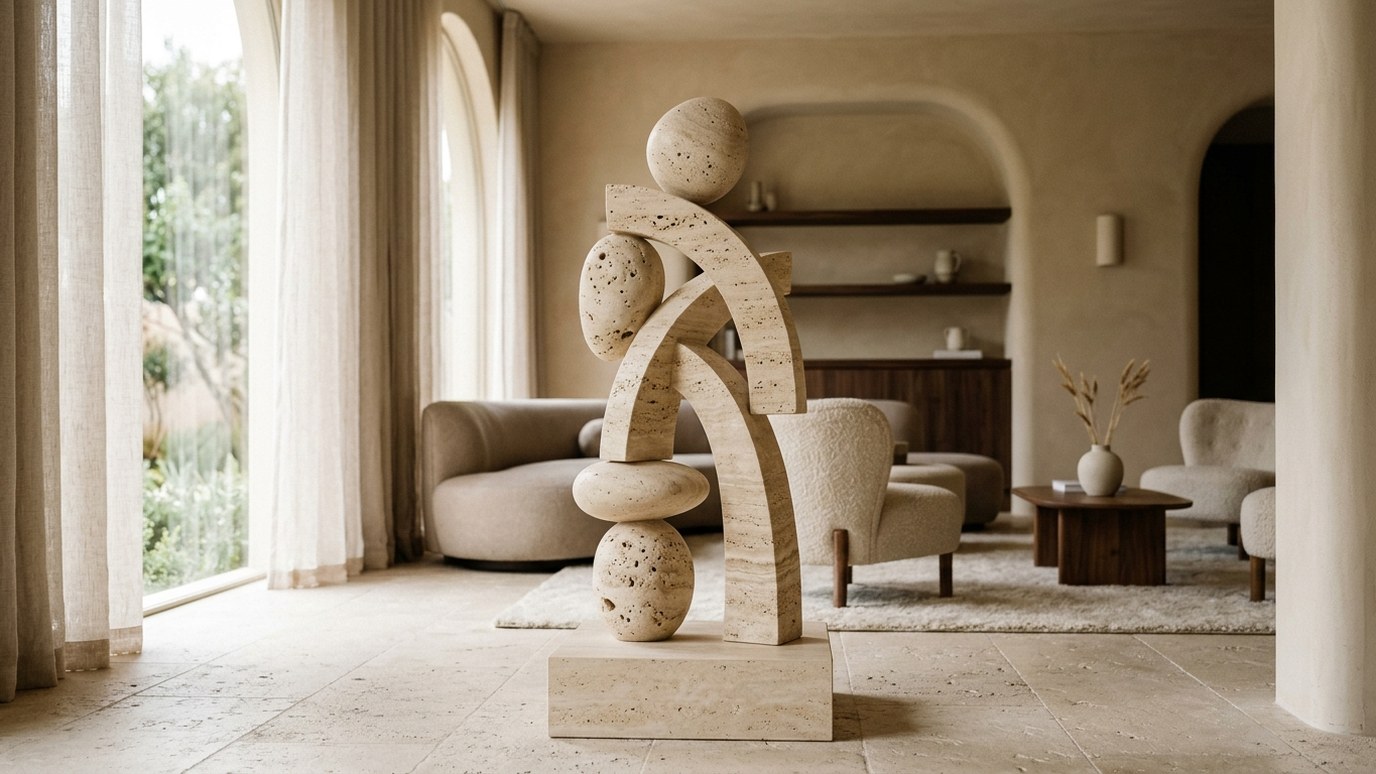
How This Four-Genre Series Fits Together
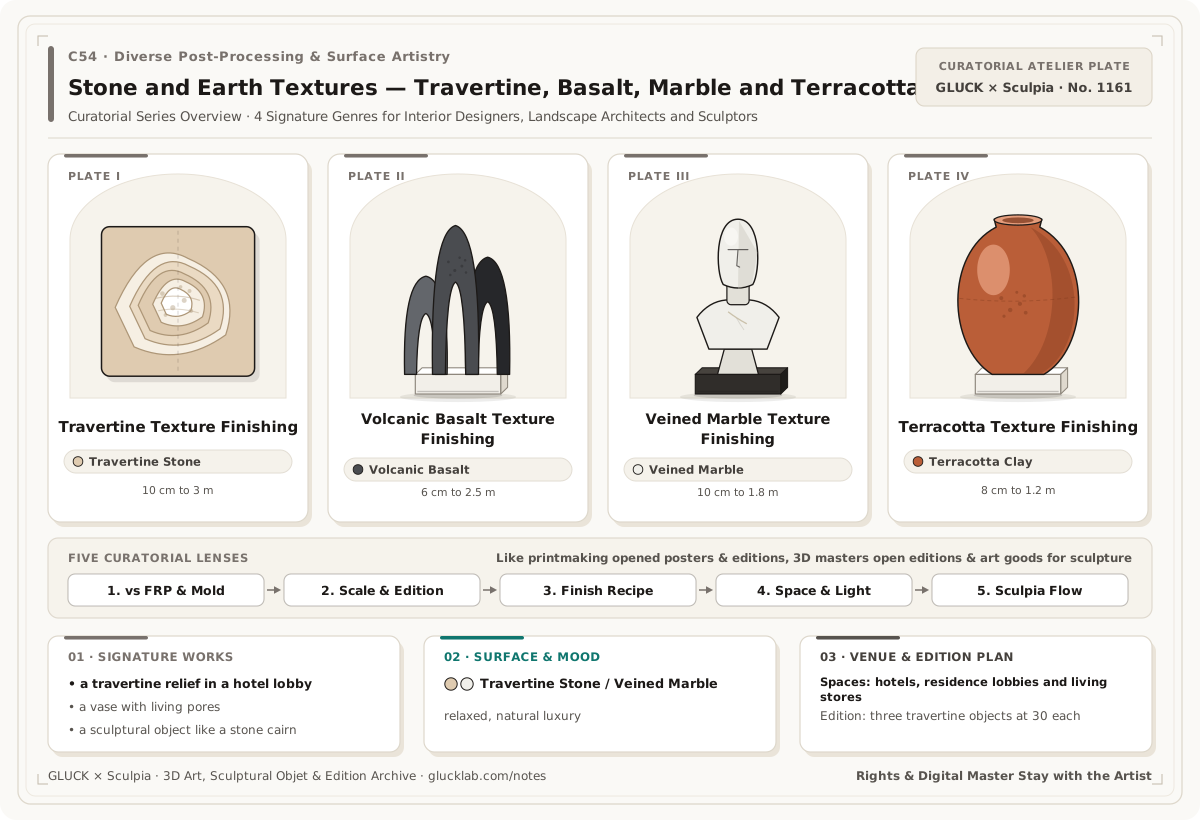
Stone and earthenware finishes that give light forms the look of heavy, fragile stone and clay. Anchored in our Diverse Post-Processing & Surface Artistry pillar for interior designers, landscape architects and sculptors, this flagship guide connects all four sculptural genres in the Stone and Earth Textures — Travertine, Basalt, Marble and Terracotta series so you can compare form, scale, surface and edition strategy in one place.
| Genre in Series | Signature Work | Recommended Finishes | Scale & Venue |
|---|---|---|---|
| Travertine Texture Finishing | A travertine relief in a hotel lobby | Travertine stone / Veined marble | 10 cm to 3 m · hotels |
| Volcanic Basalt Texture Finishing | A garden form echoing Jeju stone walls | Volcanic basalt / Cast-iron black | 6 cm to 2.5 m · gardens |
| Veined Marble Texture Finishing | A bust paying homage to classical sculpture | Veined marble / Gold-leaf gilding | 10 cm to 1.8 m · hotels |
| Terracotta Texture Finishing | A sculptural planter echoing ancient pottery | Terracotta clay / Travertine stone | 8 cm to 1.2 m · gardens |
Scale, Surface and Edition Synthesis Across This Series
Across travertine texture finishing (10 cm to 3 m) and volcanic basalt texture finishing (6 cm to 2.5 m), a single verified digital master lets artists bridge intimate maquettes and architectural centerpieces without mold seams or fiberglass dust. Meanwhile, veined marble texture finishing and terracotta texture finishing show how pairing veined marble or terracotta clay turns one sculptural language into collector editions such as "120 Jeju-inspired goods" and "70 terracotta planter objects" through GLUCK and Sculpia.
FRP and Plaster Hand Work vs 3D Sculpture: What Differs — Travertine Texture Finishing
FRP has long been the standard for sculpture because it is light and tough, but with delicate work such as travertine texture finishing its limits are clear. Carving real stone takes ages on complex curves, and corners chip in transit.
3D sculpture changes the order. The artist's original is 3D scanned, or a digital master is built from drawings, and the form is printed directly from that data. Stone-powder bases, pores and banding on free forms give a true stone face at a fraction of the weight.
In short, 3D sculpture brings four changes to travertine texture finishing. You no longer have to simplify the form. Proportions stay true when the size changes. Remaking the same work becomes easy. And hollow construction keeps it light. In places like hotels, residence lobbies and living stores, those four translate directly into breathing room for schedules and installation.
Beyond Postcards: Sculptural Goods for Travertine Texture Finishing
Museum and gallery shops have long relied on flat postcards and posters because three-dimensional multiples demanded costly mass-production tooling. Mold-free 3D production lets interior designers, landscape architects and sculptors launch small batches of travertine texture finishing—around 150 pieces at 12 cm—matched to a single exhibition.
Atelier Checklist: Practical Boundaries to Know
- Screen previews never match gallery spotlights 1:1—before finishing travertine texture finishing, we always review palm-sized swatches of travertine stone and veined marble under real light with the artist.
- Printed sculptural shells can soften near intense heat, so travertine texture finishing should stay clear of space heaters and hot halogen beams, using cool-running LEDs whenever lit from within or beside.
Planning travertine texture finishing?
Whether your next piece resembles a sculptural object like a stone cairn or an unexplored silhouette, share sketches or maquette photos with a target size near 2.3 m for a tailored 1:1 studio plan.
Questions Artists & Curators Ask About Travertine Texture Finishing
Can a travertine-look relief be light enough to hang on a wall?
Yes. Stone-powder bases, pores and banding on free forms give a true stone face at a fraction of the weight. A small test print confirms proportion and a palm-sized sample confirms the finish before production.
How does 3D fabrication compare with plaster or FRP molds for travertine texture finishing?
Traditional work faces carving real stone takes ages on complex curves, and corners chip in transit. Mold-free 3D building keeps your studio free of fiberglass dust and preserves inward folds on pieces like a travertine relief in a hotel lobby.
Which finish suits travertine texture finishing best?
Pairing travertine stone (relaxed, natural luxury) with veined marble (classical, dignified mood) covers two distinct moods; veined marble shines especially on busts, classical homages and suite objects.
Can travertine texture finishing become an edition or goods?
Yes. From one digital master you could plan a numbered 50 at 45 cm and an open edition of about 150 at 12 cm, starting from "three travertine objects at 30 each". All rights stay with the artist.
What lighting and anchoring work best when installing travertine texture finishing?
Aim low-heat LEDs from a 30 to 45 degree side angle to sculpt shadows across a sculptural object like a stone cairn, keep a weighted plinth with concealed base pins, and follow simple care: Far lighter than real stone, so shelves and walls can carry it easily.
How are edition numbers and artist rights managed on travertine texture finishing?
Every digital file and copyright stays 100% with the artist. Whether you cap a signed run at 50 pieces (45 cm) or connect online sales via Sculpia, production only happens with artist sign-off.