Sculptor's Clay Maquette Enlargement Before and After: Moving Past Dusty Plaster and FRP Molds to a 2-Meter 3D-Sculpted Work
Sculptor's Clay Maquette Enlargement Before and After: Moving Past Dusty Plaster and FRP Molds to a 2-Meter 3D-Sculpted Work — Studio before-and-after story: Zero studio dust or fumes · True proportions carried from a 30 cm original to a 2 m centerpiece and 20 cm collector editions. Source: GLUCK and Sculpia (sculpia.co.kr) artist collaboration archive.
1. Studio Story at a Glance: Before and After
Key Studio Shift: Zero studio dust or fumes · True proportions carried from a 30 cm original to a 2 m centerpiece and 20 cm collector editions (GLUCK and Sculpia (sculpia.co.kr) artist collaboration archive).
Before full-scale fabrication, the artist checks proportions on a small test print and selects the surface recipe from palm-sized swatches under gallery light.
How did digital sculpting and 3D fabrication with GLUCK and Sculpia transform the workflow for Sculptor's Clay Maquette Enlargement Before and After?
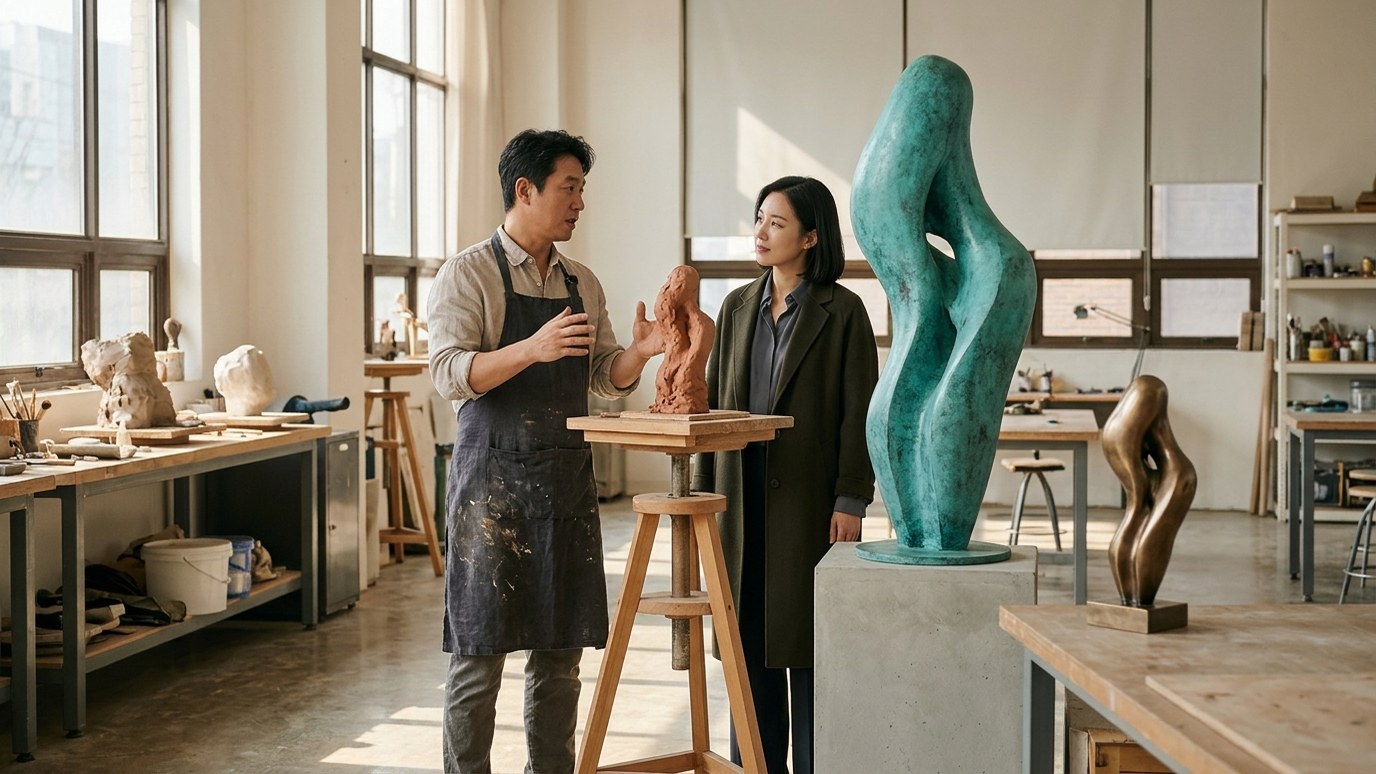
2. From Traditional Handwork Challenges to Digital Atelier Craft
Before in the Studio: Enlarging a 30 cm hand-sculpted clay maquette to two meters traditionally meant welding an armature, re-sculpting in clay, and laying plaster and fiberglass molds—filling the studio with dust and fumes while dulling delicate drapery folds.
With GLUCK and Sculpia: Non-contact 3D scanning captures every fingertip impression of the maquette into a digital master, which GLUCK and Sculpia enlarge as a lightweight hollow sculpture finished in bronze patina or matte porcelain bisque.
| Stage | Traditional Studio Route (Before) | GLUCK & Sculpia Atelier Route (After) | Curatorial Benefit |
|---|---|---|---|
| Form & Process | Enlarging a 30 cm hand-sculpted clay maquette to two meters traditionally meant welding an armature, re-sculpting in clay, and laying plaster and fiberglass molds—filling the studio with dust and fumes while dulling delicate drapery folds. | Non-contact 3D scanning captures every fingertip impression of the maquette into a digital master, which GLUCK and Sculpia enlarge as a lightweight hollow sculpture finished in bronze patina or matte porcelain bisque. | Clean, dust-free studio realization |
| Artistic Result | Mold seam lines and heavy weight | Zero studio dust or fumes · True proportions carried from a 30 cm original to a 2 m centerpiece and 20 cm collector editions | Preserves fingertip nuance and balance |
| Archive Reference | One-off manual fabrication | GLUCK and Sculpia (sculpia.co.kr) artist collaboration archive | Easy scale expansion and tour maintenance |
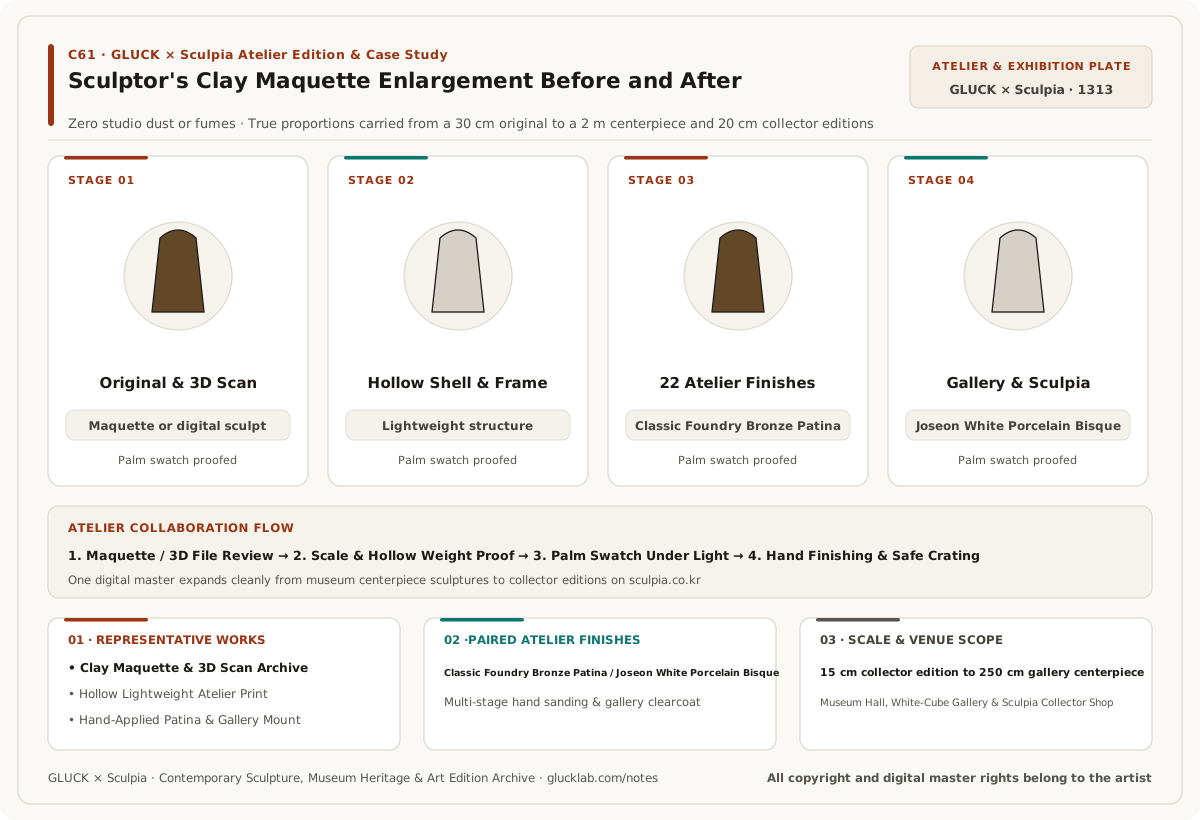
3. Finishing Care, Sample Proofing & Artist Collaboration
Before full-scale fabrication, the artist checks proportions on a small test print and selects the surface recipe from palm-sized swatches under gallery light. Whether preparing a solo museum show, a public sanctuary piece, or a Sculpia edition release, every step is tuned around the artist's eye.
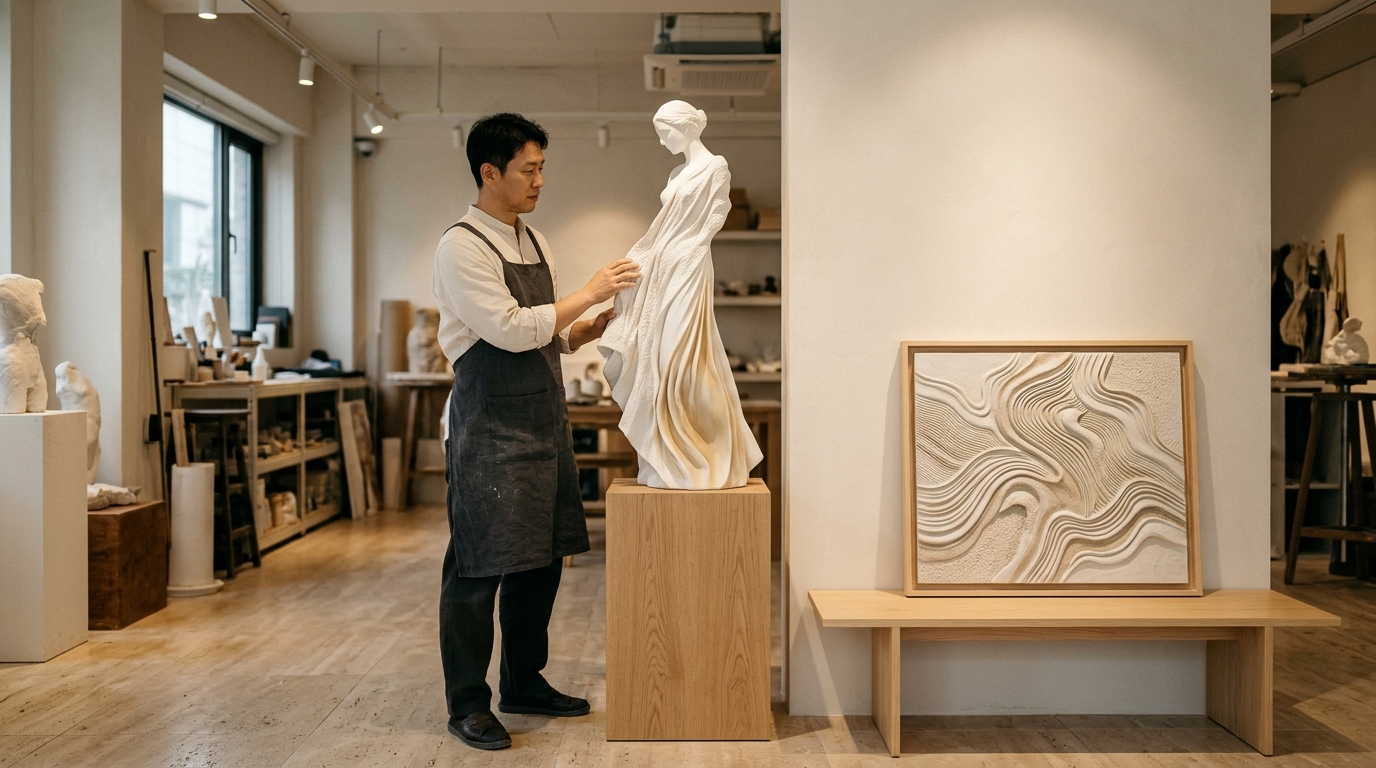
1:1 Artwork & Edition Consultation ↗ · Open Sculpia Scale & 22-Finish Simulator ↗ · Visit Sculpia ↗
Questions from Artists & Curators
Can we check the surface texture under real light before finishing the main work?
Yes. Before full-scale fabrication, the artist checks proportions on a small test print and selects the surface recipe from palm-sized swatches under gallery light. We prepare palm-sized finish swatches so the artist and curator can confirm tone and sheen under gallery lighting.
Who holds the copyright and digital master rights after collaboration?
All copyright and digital master rights belong entirely to the artist or commissioning institution. Stored files are used only for artist-approved editions or maintenance.
Can one digital master be scaled into both an exhibition centerpiece and collector miniatures?
Yes. Once the digital form is finalized, the studio can craft a large gallery centerpiece alongside palm-sized museum-shop or Sculpia collector editions.